











The beep test and your VO2 max
VO2 max is the most oxygen your body can use in a minute of hard work, for each kilo you weigh: the size of your engine. The beep test is the simplest good way to estimate it, and to watch it grow as you train.
Your score is the last level and shuttle you completed: “level 8, shuttle 6”.
How to do the beep test
Also called the multistage fitness test or the bleep test. You run back and forth between two lines 20 metres apart, in time with beeps that come a little faster at each level, until you can’t keep up.
- Find 22 metres of flat ground: a hall, a car park or a quiet road. Mark two lines exactly 20 metres apart.
- Get the recording. Several free apps play the official timings; search for “beep test”.
- Warm up for ten minutes: easy jogging, then a few faster strides.
- Run. Reach the far line with at least one foot by the beep, turn, and go again. Early levels are a gentle jog.
- Stop when you miss the line twice in a row. Your score is the last level and shuttle you completed.
Why it’s worth knowing
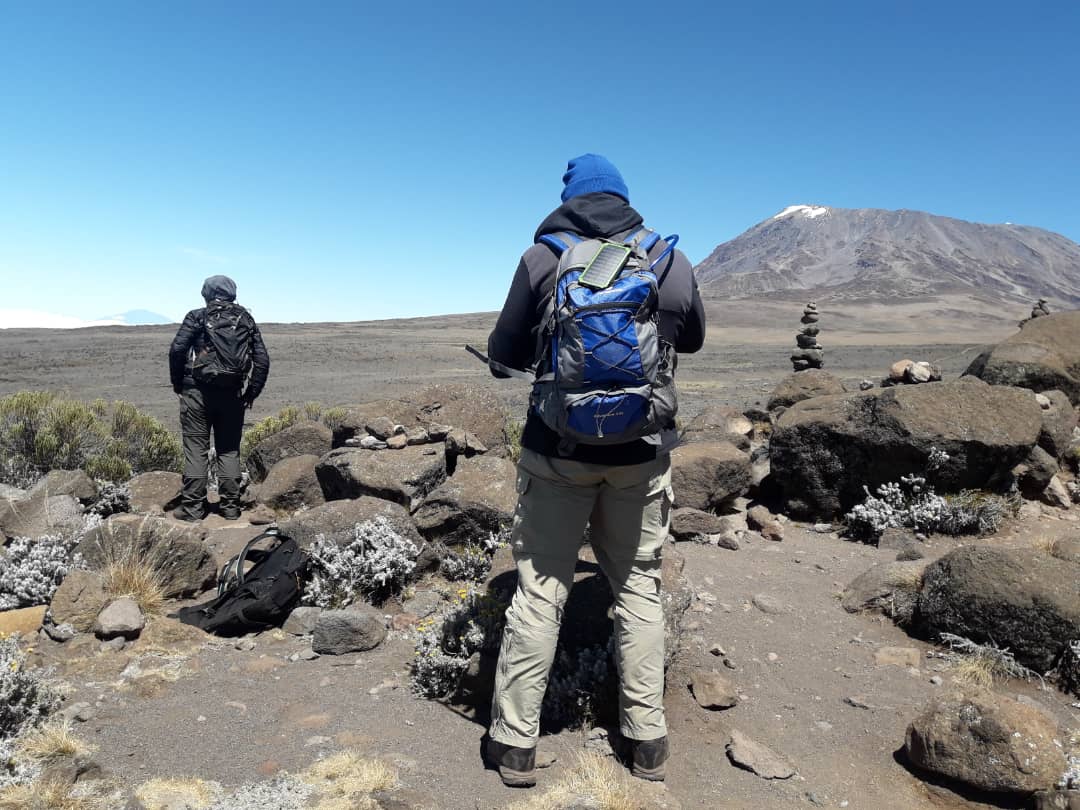
You don’t need a high VO2 max to climb Kilimanjaro, and it is no guide to how you will cope with altitude. But a bigger engine makes every hour of walking easier, so you finish each day with more in reserve. Test yourself now, then every four to six weeks as you train, and watch the number climb.
Not a runner? The timed runs in your free training plan do the same job, and plot your pace for you.
How your VO2 max rates
In ml per kg per minute, by age. Your own row and age group are highlighted once you’ve filled in the calculator.
Men
| Rating | Up to 25 | 26–35 | 36–45 | 46–55 | 56–65 | 66+ |
|---|---|---|---|---|---|---|
| Excellent | 61+ | 57+ | 52+ | 46+ | 42+ | 38+ |
| Good | 52–60 | 49–56 | 43–51 | 39–45 | 36–41 | 33–37 |
| Above average | 47–51 | 43–48 | 39–42 | 36–38 | 32–35 | 29–32 |
| Average | 42–46 | 40–42 | 35–38 | 32–35 | 30–31 | 26–28 |
| Below average | 37–41 | 35–39 | 31–34 | 29–31 | 26–29 | 22–25 |
| Poor | 30–36 | 30–34 | 26–30 | 25–28 | 22–25 | 20–21 |
| Very poor | <30 | <30 | <26 | <25 | <22 | <20 |
Women
| Rating | Up to 25 | 26–35 | 36–45 | 46–55 | 56–65 | 66+ |
|---|---|---|---|---|---|---|
| Excellent | 57+ | 53+ | 46+ | 41+ | 38+ | 33+ |
| Good | 47–56 | 45–52 | 38–45 | 34–40 | 32–37 | 28–32 |
| Above average | 42–46 | 39–44 | 34–37 | 31–33 | 28–31 | 25–27 |
| Average | 38–41 | 35–38 | 31–33 | 28–30 | 25–27 | 22–24 |
| Below average | 33–37 | 31–34 | 27–30 | 25–27 | 22–24 | 19–21 |
| Poor | 28–32 | 26–30 | 22–26 | 20–24 | 18–21 | 17–18 |
| Very poor | <28 | <26 | <22 | <20 | <18 | <17 |
The calculator uses the widely used conversion from beep test score to VO2 max, VO2 max = 3.46 × (level + shuttle ÷ shuttles in that level) + 12.2. It suits most people well, but no field test is as exact as a treadmill test in a laboratory.
Watch it improve
Our free training plan builds your weeks around your climb date and your fitness now, times your sessions, and records your timed runs, weight and body fat, so you can see every improvement.
Start my free plan