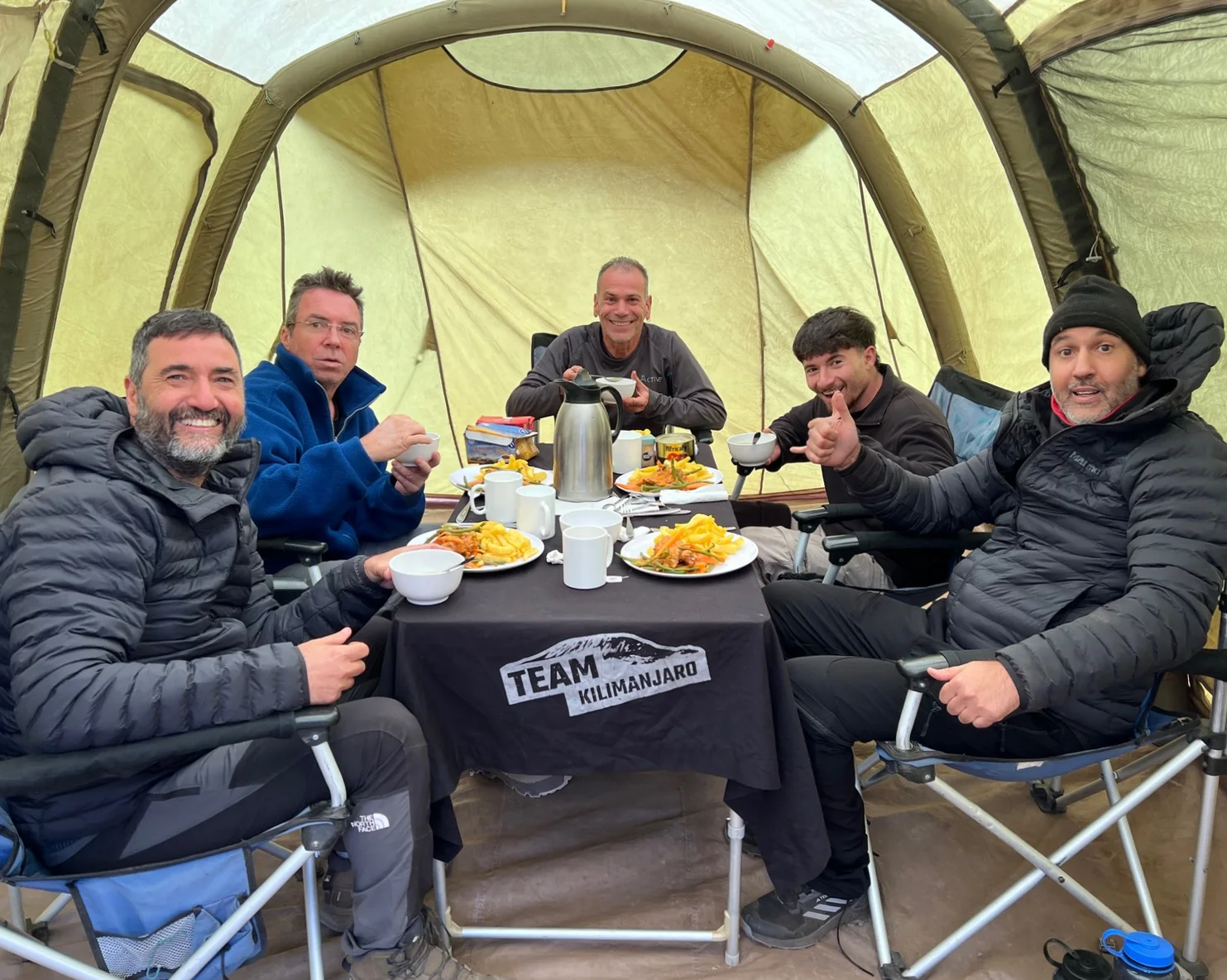
Controlled exertion at altitude
It stimulates the breathing response, improves the use of oxygen, and advances acclimatisation.

Everything you need to plan a climb, in the order you’ll need it: routes, timing, fitness, kit and costs.
Read the guide
Our own routes, groups of eight at most, and a 97.6% summit success rate, explained with evidence rather than adjectives.
See why
Every climb we run, with prices from, and the scheduled departures you can join.
See the climbs
Seven support series from Superlite to VIP, and what each one includes.
View prices

Up and down in a day or two if you are already acclimatised, or acclimatise first: permits, plans, maps and a price calculator.
Plan a speed climb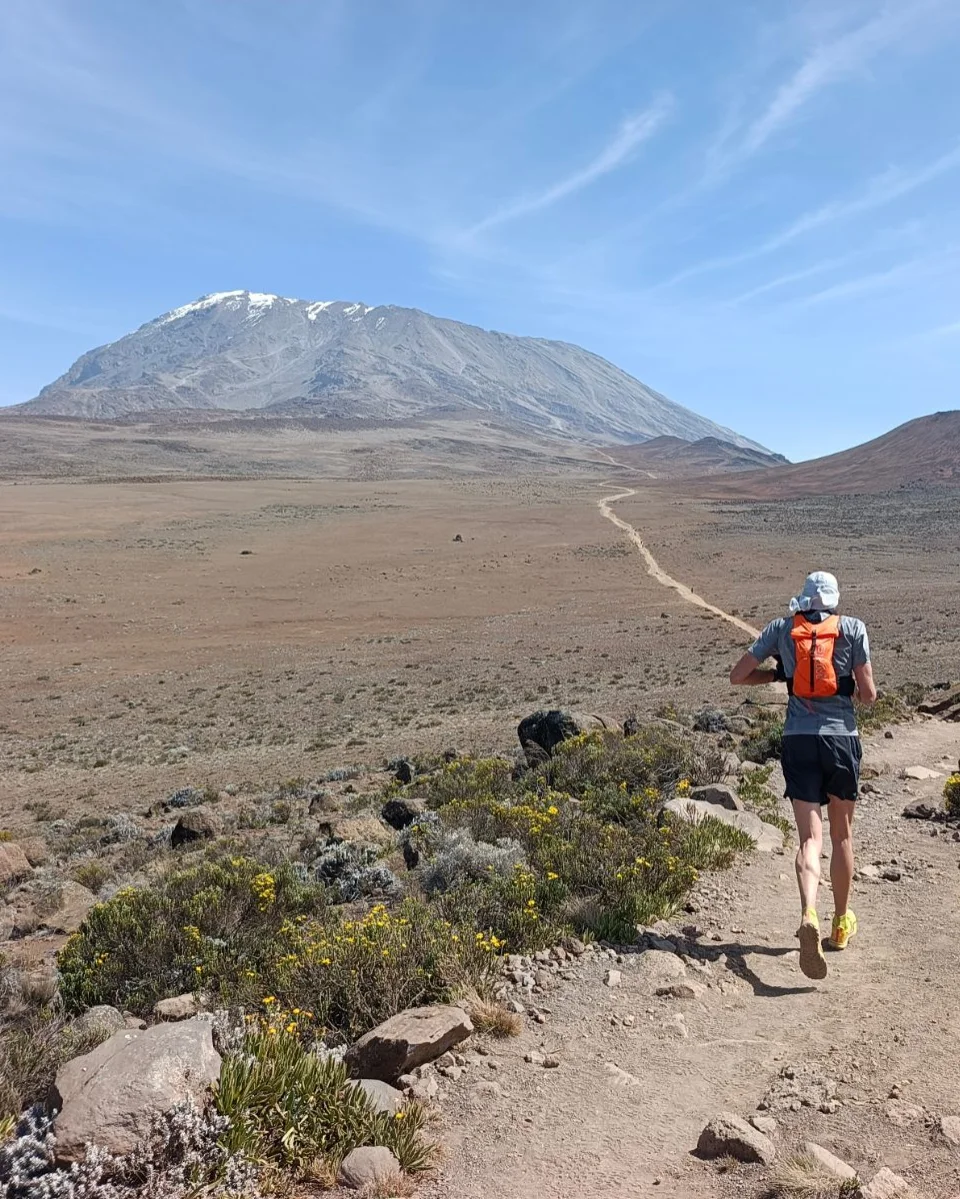
Training, health requirements, visas, vaccinations, insurance and flights: what to sort out, and when.
Start preparing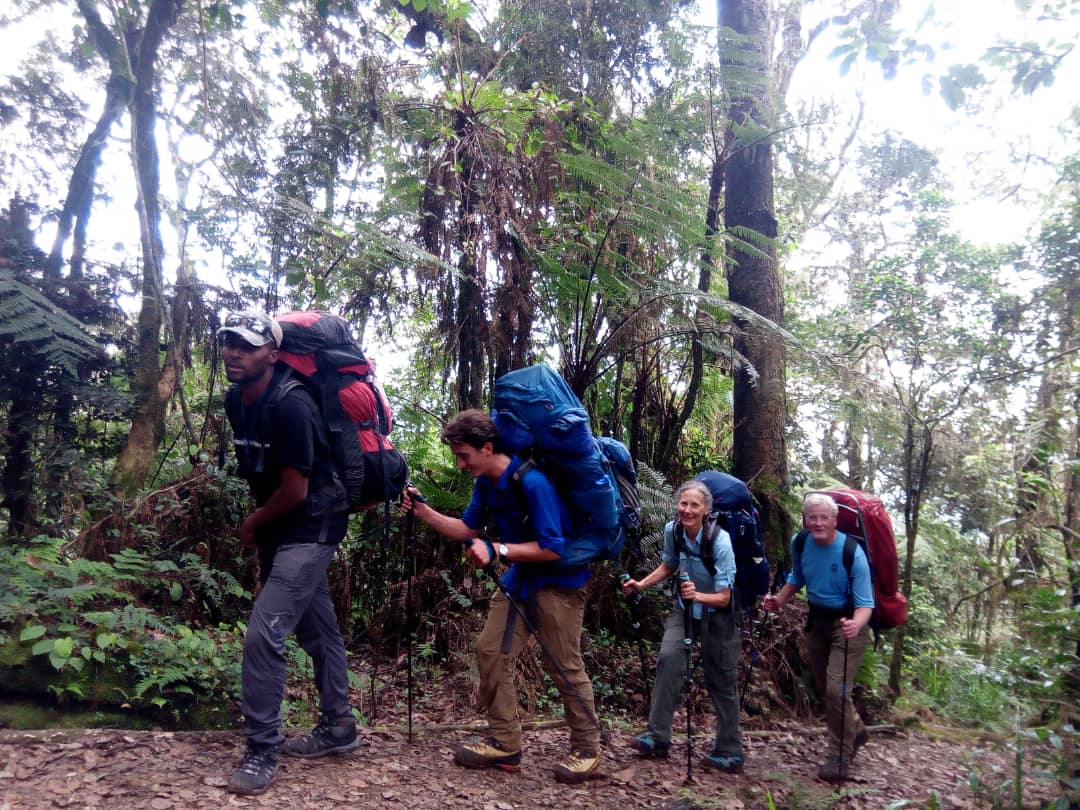

Height, peaks, temperatures, route lengths, wildlife and records, all checked against our own data.
Read the facts

Every route on one map, from our own GPS tracks, with distances, crowding and acclimatisation compared side by side.
See the map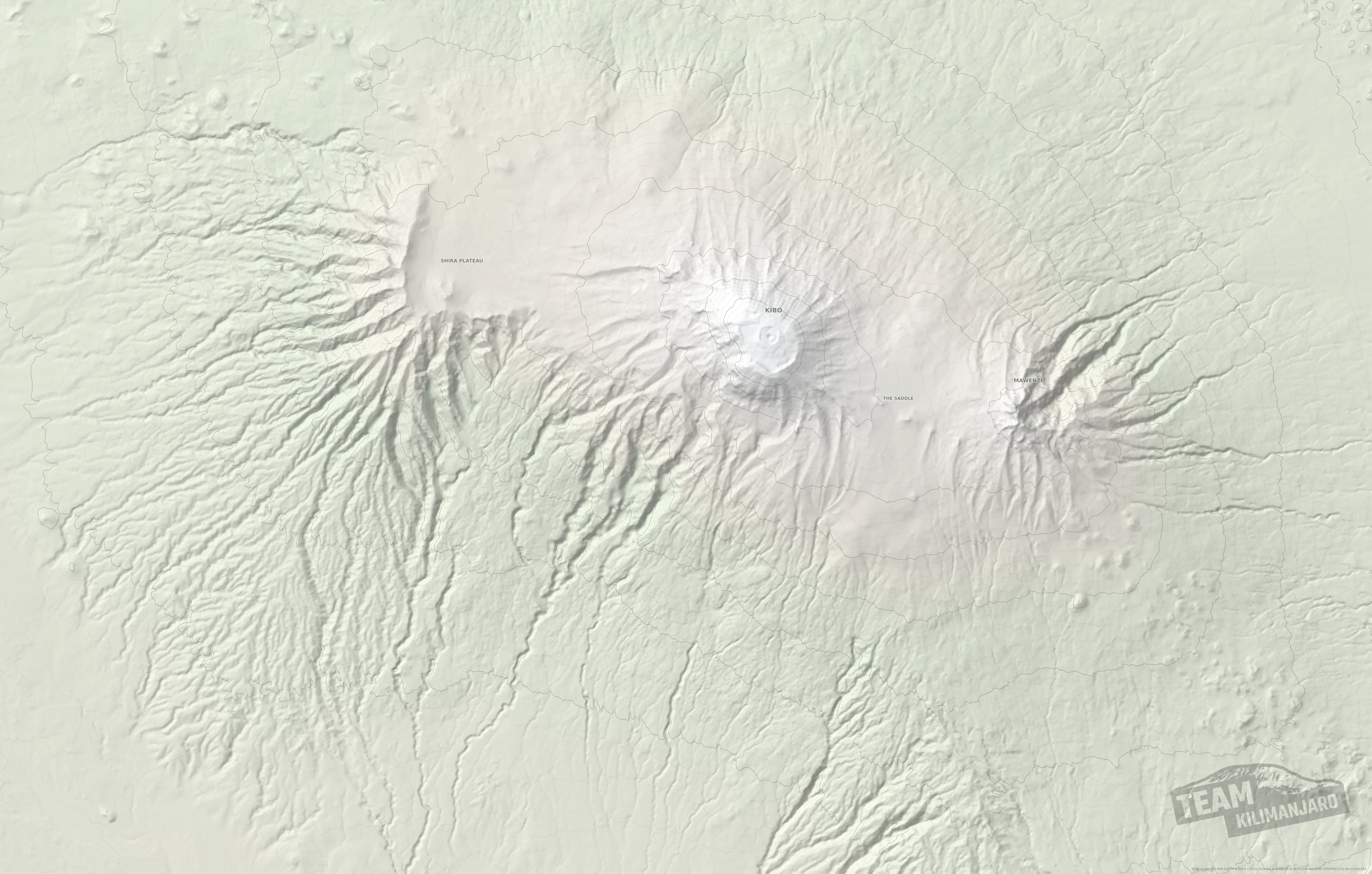

Steep and direct from the south, leaving little time to acclimatise. 46.3 km round trip.
More about Umbwe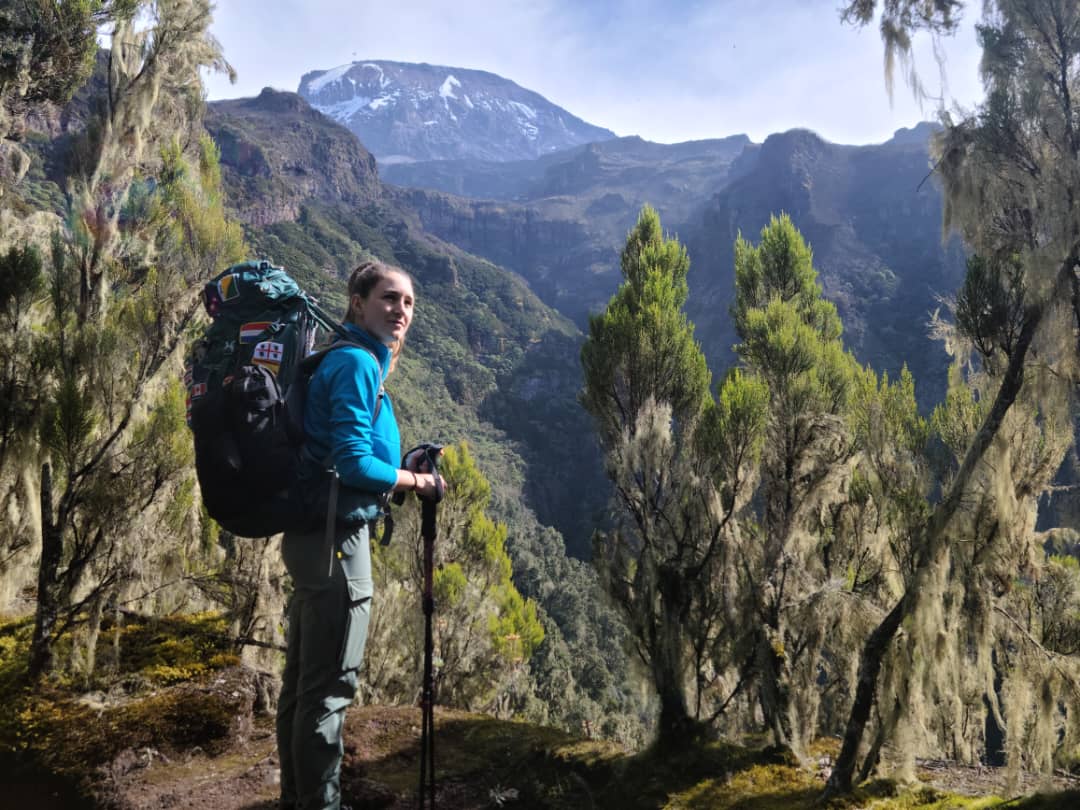
The busiest camping route, climbing from the southern rainforest onto the Shira Plateau before traversing beneath the Southern Icefields. 56.7 km round trip.
More about Machame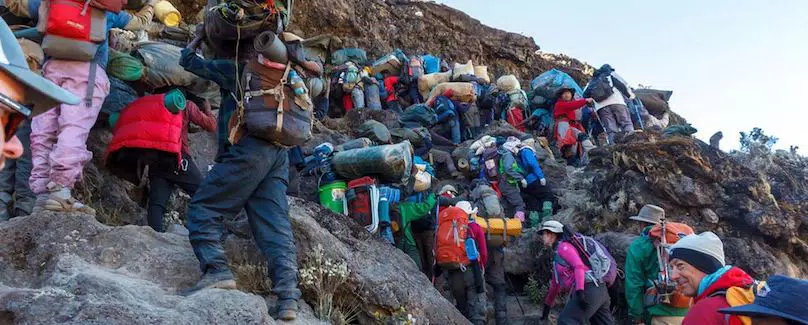
The quietest start, from the western forest onto the Shira Plateau. The standard route joins Machame beyond Shira 2; TK Lemosho, our own variation, takes the quiet northern circuit and summits from School Hut. 64.7 or 66.4 km round trip.
More about Lemosho
Starts high on the Shira Plateau, reached by vehicle: only for climbers already acclimatised, for example after Mount Meru. Seven or eight days, or joined to TK Lemosho.
More about Shira
The hut route, and the only one that comes down the way it goes up. It has the lowest success rate of the main routes. 66.9 km round trip.
More about Marangu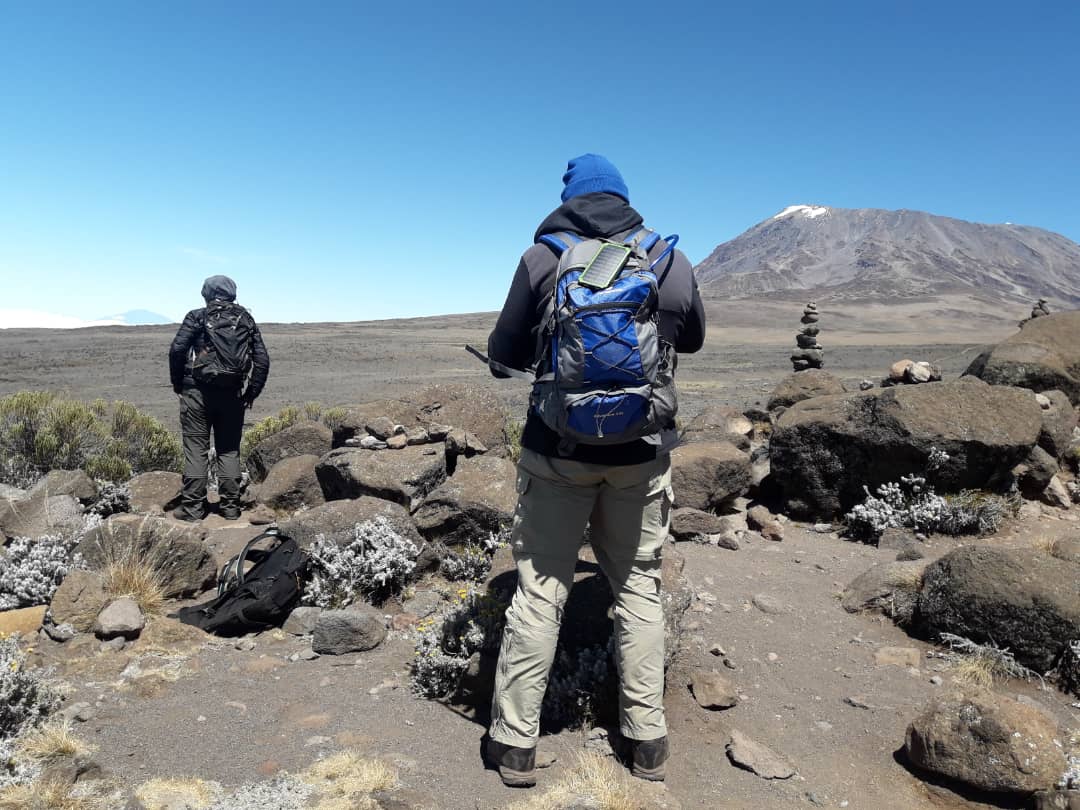
From the north, near the Kenyan border. The Rongai most companies run crosses the Saddle to Kibo Hut; TK Rongai, our own, climbs over the Mawenzi ridge and summits from School Hut. 68.0 or 72.2 km round trip.
More about Rongai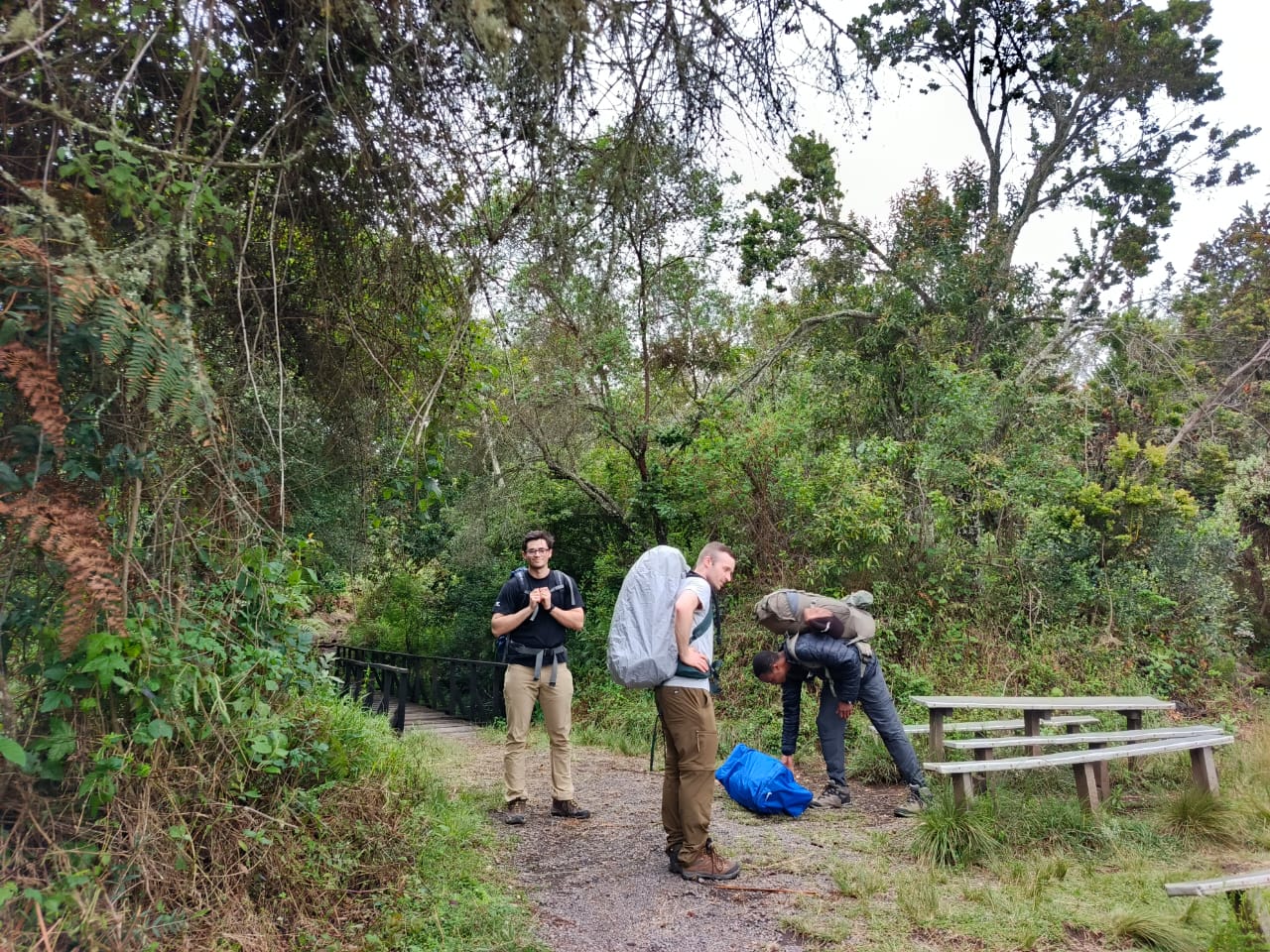
4,566 m, above Arusha: the best acclimatisation before Kilimanjaro. Three or four days, sleeping in huts.
More about Mount Meru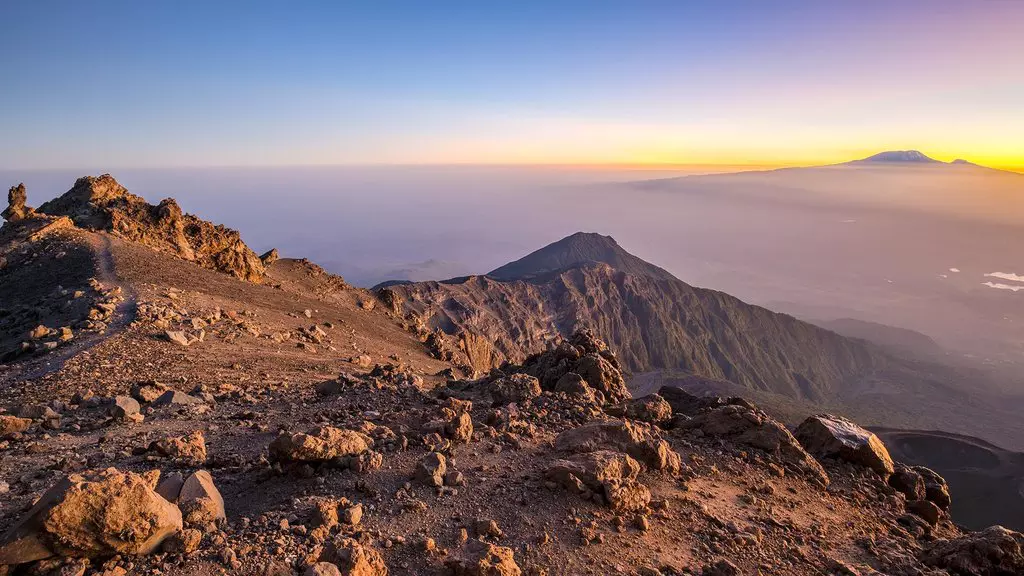
Why acclimatisation is not a matter of “more effort”, and how far to drop after climbing high.
Every successful ascent at altitude is governed by a tension that most of the Kilimanjaro industry fails to acknowledge, let alone resolve. The Respiratory Load Differential, RLD for short, is how we manage it.
The error much of the industry makes is to assume that these two always point in the same direction. They do not.
It stimulates the breathing response, improves the use of oxygen, and advances acclimatisation.
It is physiologically expensive and drains stamina, and beyond a threshold it does active harm.
At altitude, more effort does not produce proportionally more adaptation. Past a critical point it produces delayed breathing instability, poor sleep, cumulative fatigue and, in the end, less resilience on summit day.
Most Kilimanjaro itineraries rely on a crude maxim: “climb high, sleep low”. It points in the right direction, but it hides the variable that actually governs the outcome.
The body does not respond to altitude alone. It responds to total respiratory load, and that is set by:
During exertion, the body’s chemoreceptors weight dissolved CO₂ heavily, which often gives a misleading signal that breathing is adequate.
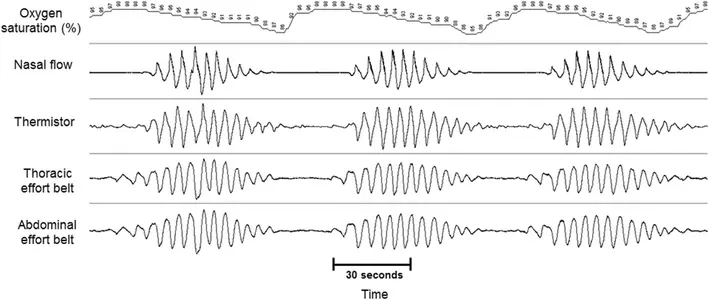
When the drive to breathe is naturally depressed, the body repays the miscalculation: fragmented sleep, periodic breathing, Cheyne–Stokes cycles and growing exhaustion.
This is why climbers who seem stable during the day can fall apart at night. The industry often puts it down to bad luck or individual weakness. It is neither. It is the predictable result of mismanaged respiratory load.
The TK Respiratory Load Differential is the vertical separation between the highest altitude reached in the day’s exertion and the altitude slept at, calibrated to compensate for the chemoreceptors’ lag during exertion and the depressed drive to breathe at night.
RLD is not a formula. It is a bounded operating range, applied as conditions change by experienced guides under continuous oversight.
How far below the day’s high point a climber should sleep, in metres.
~200 mTypically at around 3,800–4,200 m
Routinely achievable when pacing is disciplined, climbers carry little, body mass is proportionate, terrain is chosen well, climbers trust restraint over bravado, and guides actively manage pace, rests and drinking.
This is what we aim for whenever the terrain and the group allow.
250–500 mUsed only when necessary
For example with mixed-ability groups, heavier loads, less efficient terrain, or constraints imposed by the mountain itself. Even here, exertion must be tightly controlled.
500 metres is an absolute outer limit, not an objective.
600 m+For example, Lava Tower to Barranco Camp
At this level the drop is not restorative. It is enervating. The industry often reads it as good acclimatisation; physiologically, it is the opposite.
No differential is judged on its own. What the next days ask of the body decides whether the nights after a drop restore reserve or spend it.
Lava Tower to Barranco is about 670 m: some 34% beyond the 500 m limit, and more than three times the optimum. The next day gives no reprieve. The punishing spurs and re-entrants of the Karanga Valley lose about 340 m that must all be climbed again, stacked on top of the 170 m of excess the day before, and all before the hardest night of most climbers’ lives.
On our own routes the drop stays within the limit, and what follows is gentle: gradual, undulating ground on which the body has plenty of time to adjust and recover. From Third Cave the climb to School Hut is short and taken slowly, about three hours’ work, with plenty of rest before the summit bid.
A fixed number would be dishonest. Codifying RLD does not replace judgement; it explains why judgement works.
This is not guesswork. It is applied physiology, with consequences.
One of the clearest examples of a mismanaged differential is what we call the Barranco paradox. The industry assumes that a very large descent after a high point must be good for you. In practice such drops exceed the body’s capacity to steady its breathing rhythm, add needless physiological shock, and drain reserve rather than restore it.
The benefit exists only within a constrained differential.
The paradoxMore sleeping low is not automatically better sleeping low.
Kilimanjaro is not technically difficult. It is physiologically unforgiving. Most summit failures happen not because climbers lack determination, but because reserve was spent days earlier, in the belief that more exertion must mean more adaptation. RLD exists to prevent that error.
It is not a slogan. It is a constraint.
RLD underpins our own route design and our guides’ discipline on the mountain.
Tell us your dates, your group and what matters most to you, and we will plan a climb that builds your reserve rather than spending it.
Start planning